Chicago has always been a city shaped by construction. From its early days and massive infrastructure projects like the Illinois & Michigan Canal to its 77 communities, 200-plus distinct neighborhoods and ever-evolving skyline. Our city’s built environment reflects how Chicago adapts to shifting economic cycles and demographic change.
Today, Chicago’s construction market is once again at a pivotal moment, defined by a tight housing supply, sustained infrastructure investment and a broader mix of ground-up development and renovation, with adaptive reuse playing an increasingly important role.
Housing demand remains a constant, yet supply is still lagging
One of the clearest drivers in Chicago’s construction pipeline is residential development, particularly in transit-oriented neighborhoods. Central Business District adjacent areas such as the West and South Loop continue to attract investment due to their connectivity, walkability and proximity to employment centers, while other areas along the city and suburban transit lines have also seen an uptick in real estate investment.

Kinjal Patel, president of McHugh Construction (Photo courtesy of McHugh Construction.)
Despite periods of slow construction over the past few years, housing demand has not softened. In fact, 2025 ended with the median price of homes in Chicago rising 11 times faster than the nation’s median price. Elevated home prices and higher interest rates continue to keep many potential buyers on the sidelines, pushing households to remain in rental housing longer. This dynamic only tightens vacancy and drives rents higher, especially in well-located submarkets.
But, as we are finally seeing borrowing costs begin to ease, there is renewed preconstruction activity and early momentum returning to both rental and for-sale housing, including condominiums, which is a segment that has been notably slow in Chicago.
One new project designed to meet affordable rental housing demand is Southbridge Phase 1C in the South Loop. Together with Powers & Sons Construction, McHugh will begin construction in early 2026 on this public-private project. The 13-story, 80-unit mixed-income development at 2305 S. State St. will be located steps from the CTA Green Line and multiple bus routes, reflecting the continued appeal of transit-oriented development in high-demand communities.
Infrastructure and large scale investment provides long-term stability
Beyond multifamily, large scale private developments and public works and infrastructure projects remain foundational to Chicago’s construction economy.
Examples include CTA Red line extension connecting far South Side neighborhoods, modernization of other CTA lines, O’Hare 21 airport modernization and expansion, Obama Presidential Center campus, Meta and Microsoft Data Centers, professional sports stadium developments, and new master planned neighborhoods including The 78, The Foundry, and The 1901 projects.
Rail infrastructure is also significant. As the nation’s freight rail hub, Chicago continues to benefit from large-scale initiatives such as CREATE, a public–private rail modernization program designed to reduce congestion and improve efficiency across the Chicago region.
For infrastructure, industry data supports this momentum. The AGC and Sage 2025 Construction Outlook Midwestern Survey shows contractors expect the available dollar value of projects to increase most significantly in data centers (net +44%), followed by water and sewer (+30%), power (+29%), and transportation, including transit and rail (+26%). Bridge and highway projects also show positive expectations, underscoring the strength of infrastructure-related work across the region.
Adaptive reuse moves from trend to strategy
One of the most important shifts underway in Chicago is the move toward renovation and adaptive reuse. With office utilization patterns changing and vacancy rising in legacy buildings, owners are reevaluating how existing assets can be repositioned to meet today’s needs.
While 2025 data isn’t finalized, Chicago led the nation in 2024 for the most apartments from adaptive reuse projects, particularly for office-to-residential conversions. This approach aligns well with the city’s strong housing demand and its inventory of architecturally significant buildings that are prime for a second life.
Local policy changes, especially in the CBD and LaSalle street corridor, have also supported this shift. Adjustments to parking requirements, zoning flexibility and TIF opportunities have improved project feasibility and encouraged redevelopment in transit-rich areas, helping accelerate housing delivery without expanding the city’s footprint.
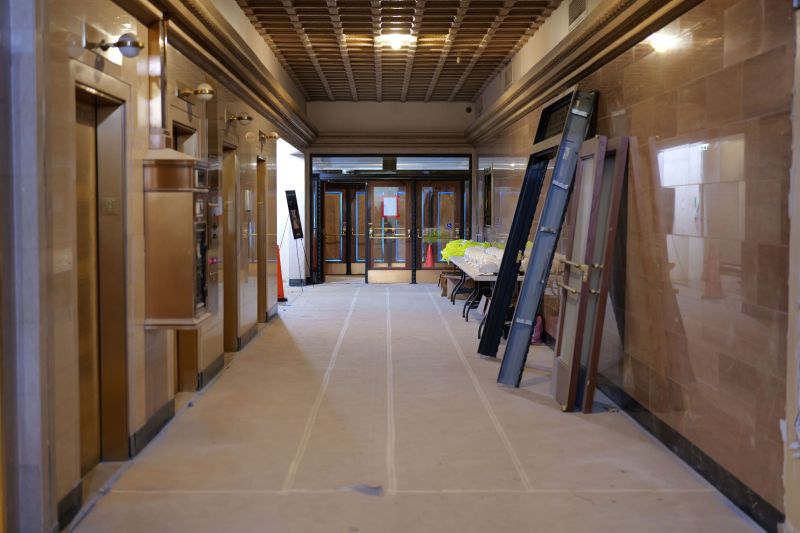
One current example of adaptive reuse is Mavrek Development’s Wacker Place, where McHugh is transforming a 1928 Art Deco office tower at 65 E. Wacker Place into 252 apartments. The project preserves the building’s historic exterior and many interior elements as well, while delivering much-needed housing in the downtown core, without adding new parking to a location already offering exceptional transit access.
Adaptive reuse projects like this require a different mindset than ground-up construction. Working within existing buildings demands deep preconstruction analysis, flexibility in sequencing and close collaboration with design teams to navigate unknown conditions. But when executed well, reuse can deliver value efficiently while preserving the life of Chicago’s historic building stock.
Challenges for contractors
Labor shortages remain a pressing concern as experienced tradespeople retire faster than new workers enter the field. According to an Associated Builders and Contractors analysis, the construction industry will need to attract an estimated 349,000 net new workers in 2026 just to keep labor supply and demand in balance with even more needed in 2027. If that gap isn’t closed, shortages could deepen and exert further upward pressure on labor costs across regions and trades.
This national backdrop amplifies Chicago’s own labor challenges and underscores why some firms are increasingly deploying technology, off-site assembly and targeted workforce development to maintain capacity and meet project timelines.
Material and supply-chain volatility are another hurdle. While pricing for many construction materials has stabilized, tariffs and global sourcing issues continue to affect steel, aluminum and specialized equipment. For large, complex projects, early procurement of materials and planning for rising costs remain critical.
Permitting and coordination, particularly utility relocation and multi-agency approvals, can also introduce schedule risk on large urban projects. The rise of data centers is putting pressure on power and fiber infrastructure creating longer utility lead times. These challenges reinforce the importance of early engagement and proactive coordination.
Technology tools for today’s projects
In response to labor and cost pressures, the industry is increasingly leaning on technology and alternative delivery methods. Off-site construction, panelization and prefabrication are helping reduce on-site labor demands and improve schedule certainty.
Digital tools that enhance transparency, coordination and cost tracking are becoming standard expectations rather than differentiators. As owners demand greater predictability, the ability to integrate technology into project delivery is essential to managing risk. At McHugh, this includes enhancements in tools such as Building Information Modeling (BIM), real time digital site progress tracking and quality control, as well as regular drone documentation to support communication and coordination with owners and subcontractors.
Building for the long term
As noted above, Chicago’s construction market is not moving in a single direction. Infrastructure, housing and adaptive reuse continue to offer the strongest opportunities, while other sectors move forward more cautiously.
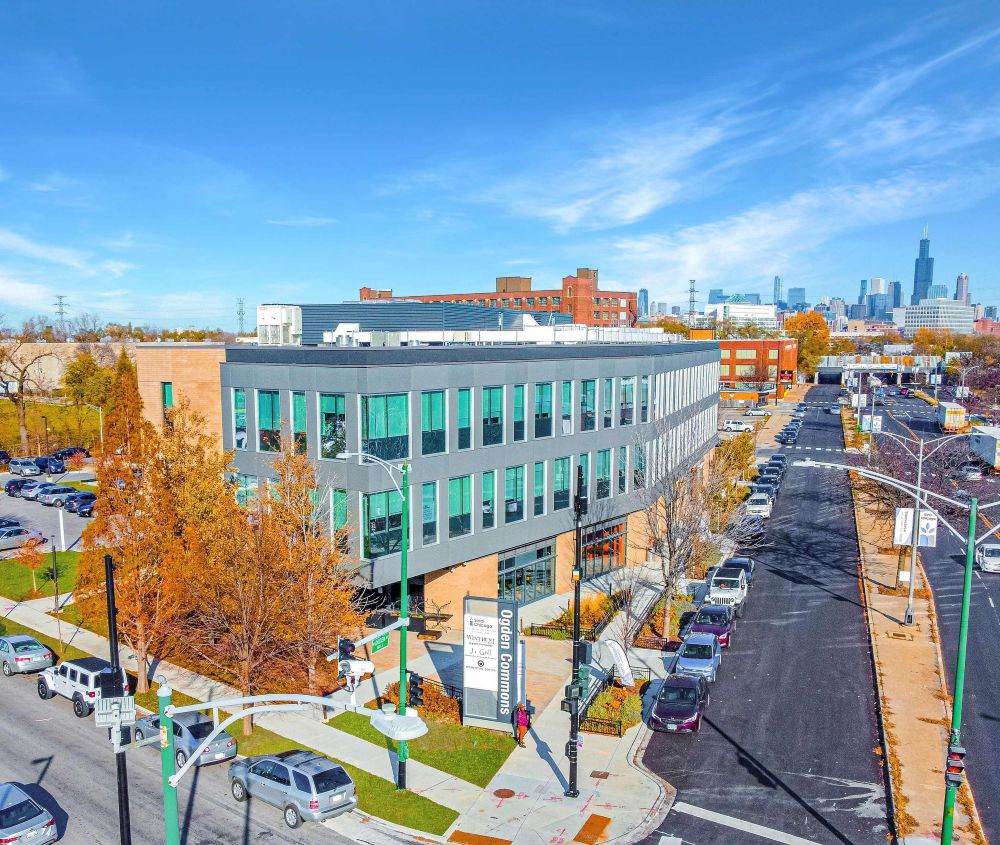
What unites these trends is a focus on purposeful investment. In Chicago areas such as North Lawndale, long-term community development underscores how construction can support broader social and economic goals. McHugh’s continued involvement in Habitat’s $200 million Ogden Commons development, including a 92-unit mixed-income building at 1325 S. Washtenaw, a neighboring 72-unit building now under construction, and a 45,000-square-foot commercial building housing Sinai Chicago’s One Lawndale Community Care and Surgery Center as well as local retailers, reflects how thoughtful development can strengthen communities while meeting real demand.
Chicago has always evolved through construction, reinvesting in its assets, modernizing its infrastructure and adapting to how people live and work. Its next construction chapter will be defined not simply by how much is built, but by how intentionally projects are planned, delivered and integrated into the city’s fabric.
For contractors, developers and public agencies alike, success will depend on balancing opportunity with discipline and building in ways that create lasting value for Chicago and our brand as a premier global destination.
Kinjal Patel is president of Chicago-based McHugh Construction.