There’s a benefit to the cautious nature of developers in the Indianapolis market. While developers in other big cities built too many office buildings, industrial facilities or multifamily communities for demand, those working in this key Midwest city did not.
That has protected Indianapolis during today’s uncertain economic times. A conservative approach to development has led to lower vacancy rates, keeping the Indianapolis-area multifamily, office and industrial sectors healthier than in competing markets.
Better times ahead for multifamily?
Investor demand is rising and renter fundamentals remain steady in the Indianapolis multifamily market, thanks largely to a level of supply that has stayed in check compared to many high-growth metros across the country.
That’s the view from Steve LaMotte Jr., managing director of investment sales with Walker & Dunlop in Indianapolis, who says the Midwest, and Indianapolis in particular, has avoided the overbuilding that has softened apartment performance elsewhere.
“Contrasting Indianapolis with most of the rest of the country in the post-COVID months and years, markets outside the Midwest were flooded with supply,” LaMotte said. “That did not happen in the Midwest. Most markets are not oversupplied. They are all appropriately supplied. Thanks in part to this, we have seen fundamentals maintain themselves in Indianapolis, in contrast to Denver, which is a poster child of oversupplied markets.”
Because supply and demand have remained balanced, Indianapolis has avoided the rent stagnation and rising vacancy that have hit the multifamily sector in other similarly sized metropolitan areas.
“Supply product and renter demand have remained in equilibrium and will continue to do so over the next several months,” LaMotte said. “We might even see things slip into undersupply for the next 12 to 24 months.”
That stability is reflected in long-term projections. LaMotte pointed to Walker & Dunlop forecasts calling for steady rent growth and occupancy in the Indianapolis market through the end of the decade: 2.95% rent growth and 94.5% occupancy in 2027; 3.08% rent growth and 94.2% occupancy in 2028; 3.08% rent growth and 94.05% occupancy in 2029; and 3.1% rent growth with 94.9% occupancy in 2030.
“You can’t get any more stable than that,” LaMotte said. “The Indianapolis market is in a great position.”
That consistency is attracting new investor interest, particularly from capital sources that once overlooked the Midwest.
“The capital is taking note,” LaMotte said. “I’m having conversations with capital sources. For 24 years, I tried to get their attention. For 24 years, they said, ‘No thanks, Steve. We will happily fly right over the Midwest.’”
Now those same groups can’t buy in places like Denver, so they are coming to the Midwest, where they can apply a positive rent growth number in year one or year two.
“They would not be as focused on the Midwest and Indianapolis if they could continue buying in the Denvers of the world,” LaMotte said. “They can’t. We are the beneficiary of oversupplied markets across the country.”
On the development side, LaMotte said new construction has already begun to slow after peaking in recent years.
“We are on a downward supply curve currently,” he said. “We peaked at 5,000 units in 2024 and 6,500 units in 2025. We are back to 4,000 units in 2026 and expect between 3,000 and 4,000 units over the next couple of years.”
LaMotte said that this number of new units might not be enough to meet demand.
“I’d argue that this is not enough supply,” LaMotte said. “I expect the development community to step into that need and be closer to the 4,000-plus mark as you look out to 2027 and 2028.”
With occupancy hovering around 95%, LaMotte said the market remains tight.
“When you are 95% occupied, that is a pretty tight market,” he said. “There are not a lot of excess unoccupied apartment units to choose from. It is still an owner’s market.”
Performance, however, varies by location. Walkable, amenity-rich districts are outperforming more auto-dependent areas.
Multifamily markets seeing the most demand from renters include downtown Carmel, downtown Fishers, Noblesville, downtown Westfield and downtown Indianapolis, LaMotte said.
Among those, Carmel stands out.
“Carmel is the land of infinite demand,” LaMotte said. “A renter looking for a place to live, a homeowner looking for a place to buy, an employee looking for a business to work for, it doesn’t matter. There is infinite demand in Carmel, Indiana. It is a remarkable community that keeps printing demand.”
As for what renters want, traditional amenities remain important, but newer features are becoming essential.
“Fitness centers, club rooms and pools are still critical,” LaMotte said. “But now there are also amenities like pickleball and co-working space. Pickleball is not universal, but co-working space should be universal. If not, you are not speaking to a large segment of your audience.”
He added that electric vehicle infrastructure is often underestimated.
“Most properties have a token two or four EV charging stations,” LaMotte said. “That, in my opinion, is underserving a market increasingly interested in EVs. The right number is more like 10 to 15 charging stations. If you are not having more than two, it is effectively the same as saying you are not interested in renting to people who own EVs.”
Downtown Indianapolis, meanwhile, is poised for a resurgence, fueled by major investment. IU Health is building a $4.3 billion Indianapolis hospital complex now, one that is expected to open in late 2027. That project will provide a major boot to downtown, LaMotte said.
“The pendulum swings,” LaMotte said. “COVID forced that pendulum to swing violently five or six years ago to suburban living. People wanted to rent in the suburbs. Now the pendulum is swinging back to downtown living.”
Some stability in the office sector
The Indianapolis-area office market is no longer in freefall. But it is still a market defined by sharp contrasts, contrasts between top-tier buildings and everything else, between walkable suburban nodes and struggling secondary locations and between pre- and post-pandemic demand.
That’s the takeaway from John Robinson, managing director in the Indianapolis office of JLL, who says signs of improvement are emerging in the office sector, but only in certain submarkets and in higher-quality buildings.
“There are some very bright spots in the suburban office market,” Robinson said. “We are seeing some of the highest rents and demand we have seen in certain pockets. It still comes down to the flight to quality. The market is bifurcated. The buildings tenants and workers want to be in, like Class-A properties in downtown Carmel, Keystone Crossing and Fishers, are seeing growing rents and increased demand.”
Outside of those pockets, the story is far less encouraging.
Robinson said that in some of the tertiary submarkets in the Indianapolis area, office demand remains static.
“If you have a B-class building, your vacancy is high and your outlook is not good,” Robinson said. “That’s why we are seeing a lot of conversions, buildings being redeveloped into alternative uses like schools, hotels and multifamily. There are bright spots in the market, but it is very divided.”
That divide can be traced back to the earliest days of COVID, Robinson said. And the numbers bear this out. The demand for office space in the Indianapolis market is down 50% from the days immediately before the start of COVID quarantines.
“That is a massive decrease in demand and the driving force behind the market dynamics in today’s office world,” Robinson said. “The large office deals we saw before COVID have disappeared.”
In better news for landlords and owners, tenants that are leasing office space today are showing a willingness to pay more, just for less space.
A tenant in 2023 or 2024 might have rented 40,000 square feet and paid $25 a square foot, Robinson said. Today, these same tenants only need 20,000 square feet. Because they are renting a smaller amount of space, they don’t mind paying $30 a square foot for a better quality office.
That shift is fueling the continued “flight to quality,” with amenities playing a central role.
“It has been a war of amenities,” Robinson said. “Landlords are partnering with tenants and helping with return-to-work policies. Fitness, food, exercise and walkability are all critical. If everything is closed around you, you need to have it in the building. The workplace needs to be a magnet to draw people in.”
Top-performing buildings, Robinson said, are those that offer an experience beyond the office itself.
“The office areas that are doing well have experiential components,” Robinson said. “Employees can do things during the day, like walk around, exercise, shop, run errands. The height of office demand in central Indiana is downtown Carmel. It is the gold standard for what tenants are looking for in walkability.”
After several years of uncertainty, Robinson said the broader office market is at least finding its footing.
Robinson said that he sees an office market now that is more stable. The Indianapolis-area office vacancy rate peaked at the end of 2024. Demand has been down 40% to 50%, but it has stabilized.
Part of that stability comes from greater clarity around workplace strategies.
“We haven’t heard about return-to-office policies in 18 months,” Robinson said. “Everyone has their plans, and they are in place. The momentum of in-office attendance is starting to increase.”
Most companies, he added, have settled on a hybrid model.
“Most companies are still doing hybrid,” Robinson said. “That is the solution they have settled on. I think that is good for workers. You need to be in the office. You can have a job remotely, but you can’t have a career remotely. I have always said the pandemic killed the necktie and it killed the Friday workday. Everyone gets to work remotely on Fridays.”
The office sector in downtown Indianapolis is also showing signs of resilience, particularly when compared to peer cities, Robinson said.
“In the Indianapolis CBD, if you look across the country at similar-sized cities, we have made a much better recovery than others,” Robinson said. “The fundamentals of our downtown are convention, tourism and sports. Those have returned to pre-COVID levels and are doing well.”
A key factor in that recovery has been the removal of obsolete office space through conversions.
Robinson said that the Indianapolis-area office market has benefitted from 500,000 to 600,000 square feet of outdated office space coming off the market.
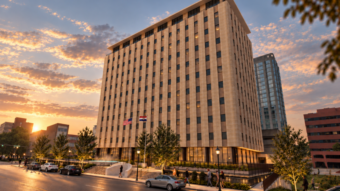
Important examples? Floors in Capital Center are being converted into a Moxy by Marriott hotel. Circle Tower in downtown Indianapolis is being converted into an AC by Marriott hotel. The office building at 220 N. Meridian St. is being converted to multifamily.
Still, Robinson said downtown’s long-term health will depend on rebuilding its street-level energy.
“We have to get the retail back and the foot traffic downtown so that office users have options to eat during the day,” he said. “It is getting better.”
A collaborative environment for development
For more than a decade, Hendricks Commercial Properties has quietly but steadily deepened its presence in Indianapolis, drawn by something the developer’s chief executive officer Rob Gerbitz says isn’t always easy to find: a market where developers, government and the public are aligned and striving for the same goals.
“We really like the market as a whole,” Gerbitz said. “The city of Indianapolis and the state of Indiana are collaborative. It’s easy to build relationships. The market was positioned for us to grow as a company.”
Gerbitz says the firm’s long-term commitment to Indianapolis stems from more than favorable economics. It’s about relationships, not just with officials, but with the community at large.
“In general, what I’ve been impressed with most is the overall people of Indianapolis and Indiana as a whole,” he said. “Developers are not always the favorite people of the public. That’s the nature of the business. But the people have been great. Their support for what we have done has helped us continue to want to grow our activity in the Indianapolis market.”
That support has encouraged Hendricks to keep investing and, in doing so, reflects a broader trend: Indianapolis continues to position itself as a developer-friendly market at a time when many cities are struggling to attract large-scale projects.
At the center of that development activity is a growing emphasis on mixed-use projects, which Gerbitz views as both an opportunity and a challenge.
“We are a company that wants to help communities grow,” he said. “Obviously we want good developments that are solid investments. But part of our overall drive is helping communities grow.”
Combining office, residential, retail and entertainment components creates the “live-work-play” environment that so many property owners, tenants and residents want.
“You bring in the housing, it completes the live/work/play environment,” Gerbitz said. “We like the adaptability of it. We like the balance of mixed-use, with retail, restaurants, entertainment, and having the base of office users there to create stability for the rest.”
But the appeal of mixed-use comes with complexity.
“When you do mixed-use, it is so hard,” Gerbitz said. “We want to bring something that is substantial, from the branding and design to the uses. I love it. I’ve been in mixed-use my entire career. But it is hard and complicated. It can be a head-scratcher.”
That complexity requires deep research and, just as importantly, a willingness to pivot.
“An enormous amount of due diligence and research goes into it,” Gerbitz said. “We look at so many different scenarios of how it will work. We get to a point where we feel good, but we always want to have adaptability.”
Another key ingredient in successful mixed-use developments? Entertainment.
“That is so important for us,” Gerbitz said. “After people eat and drink, they either go home or they go to an entertainment option. You need that next level, something for people to do.”
He points to emerging concepts that are reshaping how developers think about these spaces, from pickleball venues to experiential destinations like PopStroke, backed by Tiger Woods.
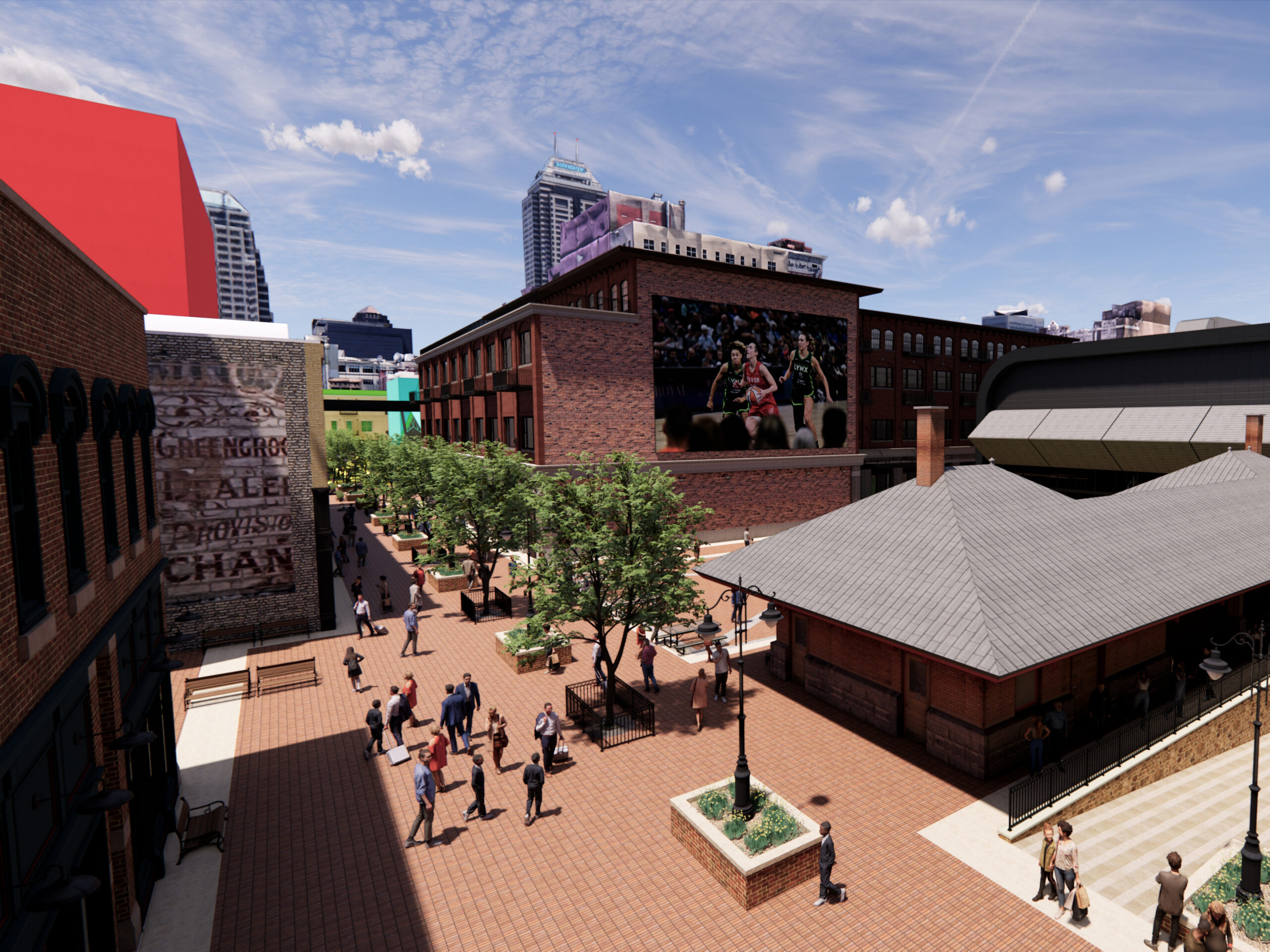
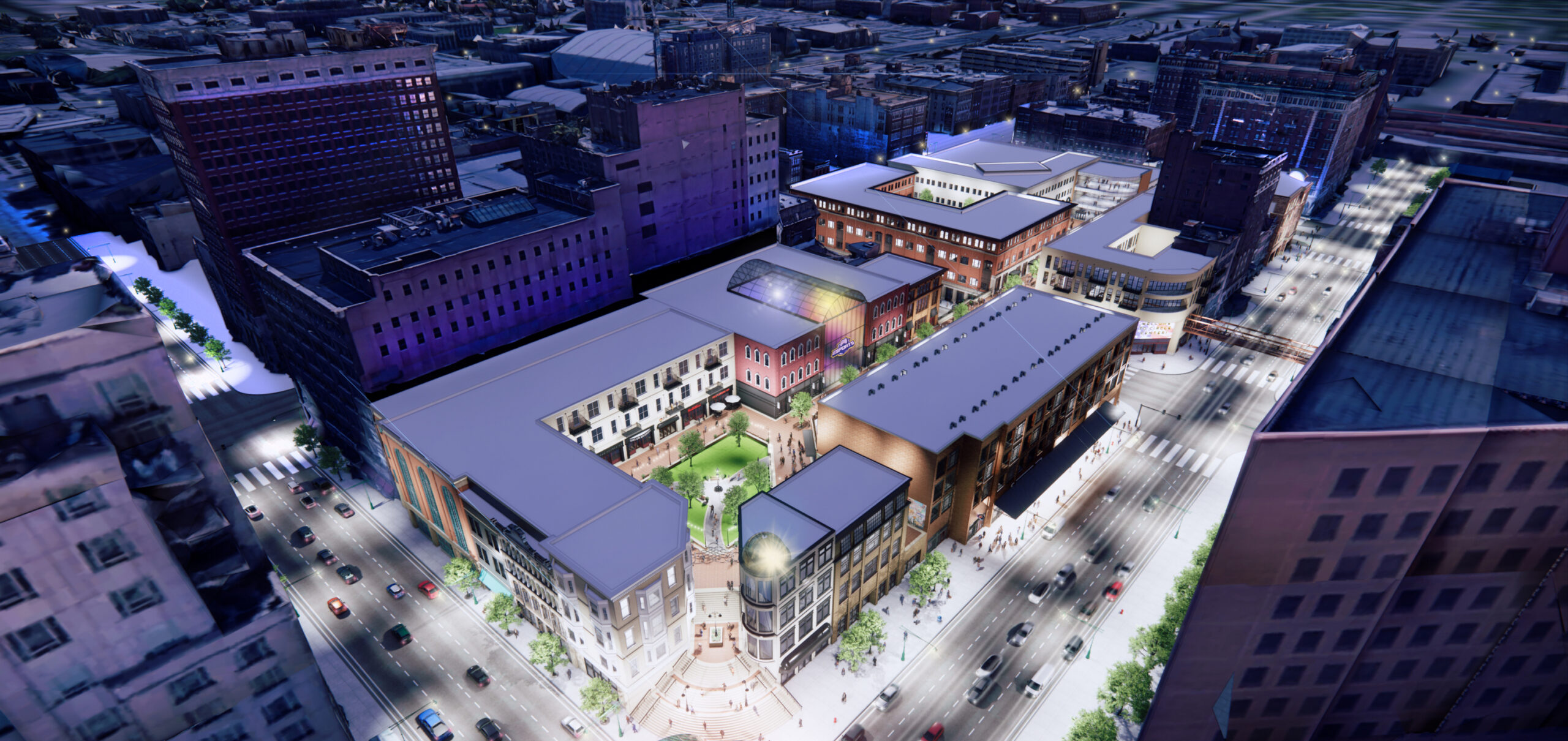
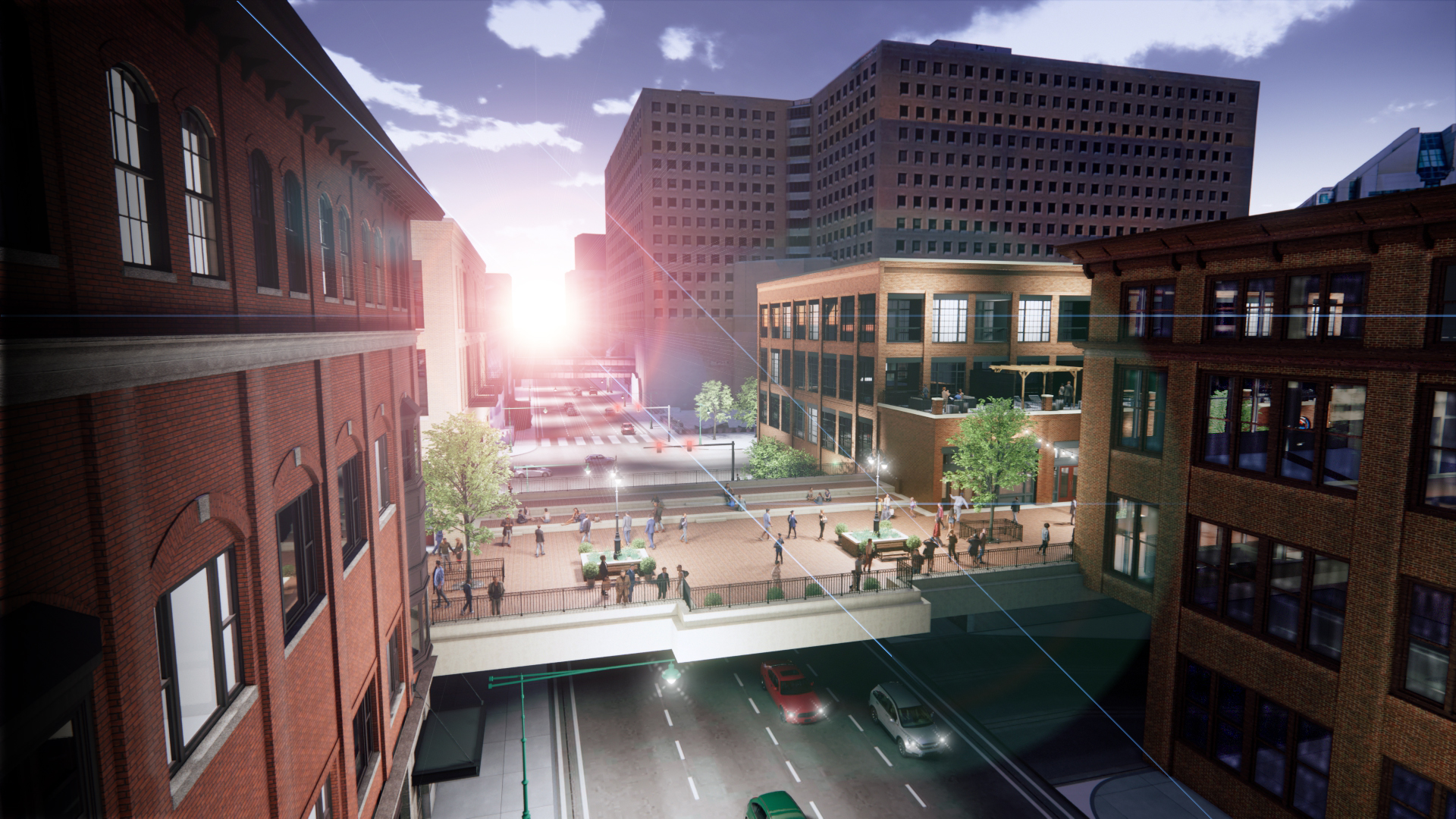
All of these trends are coming together in one of Hendricks’ most ambitious Indianapolis projects: the redevelopment of the former Circle Centre Mall site into an ambitious mixed-use development known as Traction Yards.
Hendricks was selected by the city to reimagine the site, and the firm is now in the design phase of a project that will transform the enclosed mall into an open, connected mixed-use district.
“It will no longer be a mall,” Gerbitz said. “We want to reimagine it as mixed-use. We need office. But what we need most is housing, then the retail and entertainment components.”
That emphasis on housing reflects a broader need in downtown Indianapolis.
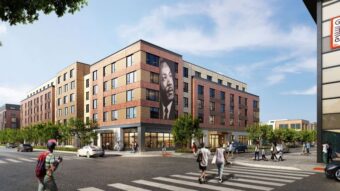
“The housing is such a need, from workforce housing to market-rate apartments to condominiums,” Gerbitz said. “We need to get more affordable housing options in downtown Indianapolis.”
Plans call for opening up the site with a new street running through the development, lined with retail, with office and residential space rising above.
As with any project of this scale, community input has played a key role.
“Through all our diligence of trying to understand what the community wanted, there was a consistency,” he said. “People asked, ‘Can we have something there for us first?’ We want everyone from Indiana and Indianapolis to come to this development.”
Like many large-scale mixed-use projects, Traction Yards will take time. Hendricks is working through design and planning, with a target opening for the first phase in late 2028.
“I want it to be tomorrow,” Gerbitz said. “I lose patience after a while. But I also understand how this works and the time it takes.”