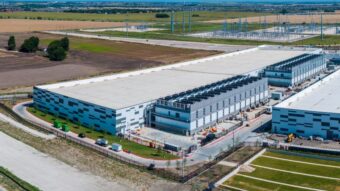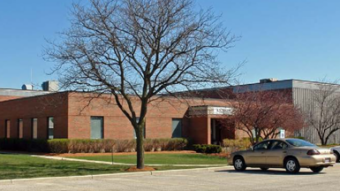
Chicago’s industrial construction sector is slowing, but that’s not necessarily bad news. Developers who once raced to deliver speculative projects are now weighing each move carefully, balancing financing hurdles with the evolving demands of tenants. The result is a more disciplined cycle that could strengthen the market’s long-term resilience.
“While there are some things happening around the greater Chicago area, activity is well below the levels we’ve seen in recent years,” said Trevor Ryor, vice president of industrial at Clayco. “Larger build-to-suit deals are moving slowly with a longer lead time before breaking ground. Currently, much of the builds are smaller infill sites with buildings less than 100,000 square feet.”
That pivot toward smaller projects underscores how the market has adapted to higher interest rates and limited access to capital. Developers are still active, but their focus has narrowed to infill and suburban submarkets with reliable demand.
“Infill areas in and around Chicago, along with West and Southwest suburbs, are seeing the most activity,” Ryor said. “The I-55 and I-80 corridors continue to be leaders due to the availability of developable land for industrial based buildings.”
Financing is now the central constraint on new construction. Deals are still getting done, but capital partners are applying stricter underwriting standards and choosing carefully.
“Financing for new deals is getting better but securing both debt and equity remains a challenge,” said Steve Schnur, chief operating officer at CRG. “Capital partners have plenty of opportunities and can be more selective on what deals they fund.”
That selectivity is reshaping the scale of projects that move forward. Smaller buildings are easier to finance, require fewer approvals and fit neatly into infill locations. Industrial developers are also competing with acquisitions and distressed opportunities in other asset classes, making it harder to win the attention of cautious investors.
Capital is also flowing toward multifamily acquisitions and distressed office, forcing industrial developers to fight for the same pool of funds. That competition has raised the bar on what qualifies as a financeable deal, especially in Chicago where investors remain cautious despite strong fundamentals.
“Capital partners are also being very diligent in underwriting projects which results in costs, rents, cap rates being further challenged and scrutinized with higher levels of conservatism,” Schnur said. “Some equity and debt groups appear to be more interested in smaller projects that require less levels of approval.”
For a fully integrated builder like Clayco, which operates through subsidiaries including design-build firm Lamar Johnson Collaborative and developer CRG, this environment favors experience, scale and efficiency. Firms that can streamline costs and deliver quickly are more likely to push projects across the finish line.
At the same time, tenants are exerting more influence over how projects are designed and where they are built. Flexibility has emerged as the defining requirement, shaping decisions around power, parking and expansion capacity.
“Tenants are prioritizing flexibility,” Ryor said. “Key features include expansion ability, power availability to the building site, multiple entrance access points and trailer parking or ability to add more.”
Manufacturing users in particular are making high-capacity power a non-negotiable. As automation and advanced production processes reshape the industrial landscape, developers who can deliver reliable power access hold a clear advantage. This has eliminated some otherwise attractive sites and reinforced the selective nature of today’s cycle. Those constraints are shaping not only which projects move forward, but also how developers design buildings to ensure they can adapt as tenant requirements evolve.
While the slowdown has raised concerns in some corners, Clayco leadership views restraint as a stabilizing force. Chicago’s market avoided the kind of overbuilding that plagued other metros during the post-pandemic boom, and that discipline is now a competitive strength.
“There are definitely opportunities,” Ryor said. “Development in Chicago has shown quite a bit of reserve over the past couple of years which has helped avoid oversupply.”
That restraint is paired with enduring fundamentals that make Chicago one of the nation’s most important logistics hubs. Its combination of airports, rail networks, interstate highways, utilities, and skilled labor provides a foundation few markets can match.
“Fortunately, greater Chicagoland has attractive amenities such as multiple airports, a network of interstates and railroads, land, ample resources such as water and power, and an educated and strong workforce,” Ryor said. “These assets position Chicago to continue to be a big industrial market with opportunities for years to come.”
The Chicago industrial pipeline may not be surging, but it is far from stagnant. Developers are responding to tenant needs, capital constraints, and vacancy levels with precision rather than speed. That selectivity could prove to be the market’s greatest strength in the years ahead.
For Clayco, which has delivered major industrial, manufacturing and logistics projects nationwide, Chicago’s current cycle is less about volume and more about positioning. Projects that do move forward are designed to last, aligning with tenant requirements and market fundamentals that have kept the region competitive for decades.