It’s not a new trend, but it’s one that’s showing no signs of slowing: Patients today are demanding more care in medical office buildings, freestanding clinics and ambulatory centers. The goal? Avoid the hassles of seeking care in a sprawling hospital campus.
This evolution in patient expectations – which, again, is only gaining in strength – has caused a shift in the commercial real estate needs of healthcare providers. Today, physician groups and medical systems are focusing on adding smaller-scale medical facilities across their markets.
As Ross Goyer with Indianapolis’ Cornerstone Companies says, medical providers are going where the rooftops are. It’s no longer enough for healthcare providers to operate a centrally located hospital and expect patients to come to them. These medical providers must go to where their patients live and work.
Goyer understands this trend. He’s executive vice president of brokerage with Cornerstone Companies, a brokerage that helps physicians, hospitals and third-party owners develop, build, lease and manage healthcare real estate.
“Patients don’t want to go to the hospital unless they have to be in the hospital,” Goyer said. “There’s been a shift to the outpatient setting for a rising number of procedures. Insurance companies like this, too. They like to see more medical care done in an outpatient setting. It’s cheaper than a hospital setting.”
Ben Cohen, senior vice president of brokerage with Cornerstone Companies, said that another reason for the strength of the healthcare real estate sector is that patients and physicians still prefer to see each other in person.
“Medical is still a use in which providers have to see their patients,” Cohen said. “There was a scare during the pandemic that the way of practicing medicine would drastically change and that the use of telehealth services would increase substantially. There was a worry that the need for patients to come into the office would decrease.”
That, though, didn’t happen, Cohen said.
“If anything, since the pandemic we have further strengthened the notion that both patients and clinicians appreciate and need that personal one-on-one time in person,” Cohen said. “People recognize that seeing each other in person is far superior to being seen virtually.”
Decentralized care
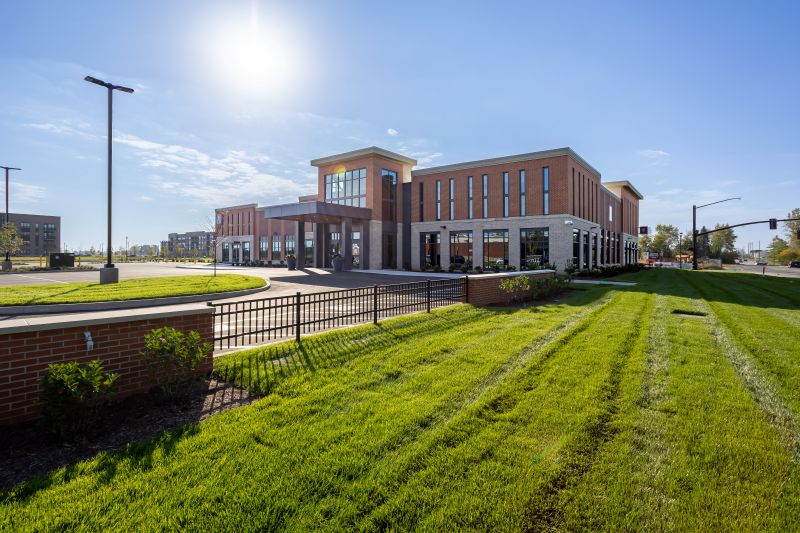
Because of the move to decentralized care, physician groups and healthcare providers are frequently opening new medical office space. This is happening, too, in the Indianapolis market, where Goyer says that there is a “decent amount” of demand for new medical office space.
Goyer points to the northern suburbs as being an especially strong market for this type of real estate. Communities such as Zionsville, Westfield, Carmel, Fishers and Noblesville are all seeing a steady influx of new medical office space, Goyer said.
“There’s been a push by patients wanting to be seen for as much as they can as close to home as possible,” Cohen said. “That has led different provider groups to expand their reach from a real estate perspective. They are trying to integrate into as many different communities as they can to allow patients to be seen as close and conveniently as possible.”
Cohen said that larger healthcare systems with enough capital are buying land in what now seem like far-flung markets and holding it for years to wait for population growth to hit those markets.
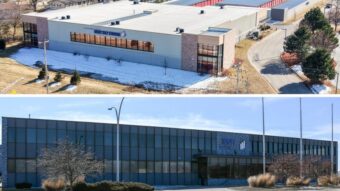
Other health systems act quickly when they see a market that they need to serve. They might purchase a retail center or flex building and remodel it into a medical space.
Still other health providers are open to becoming landlords, Cohen said. If they have extra space in their buildings, they’re not hesitant to rent out that square footage.
“Many systems and groups have become more strategic with their real estate moves,” Cohen said. “That has led to a more competitive landscape within the healthcare real estate realm, not only in Indianapolis but nationally, too.”
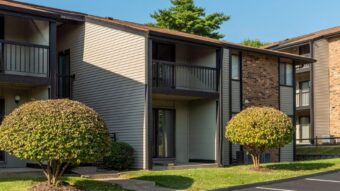
And some of this new space is resulting from the conversion of traditional office space into medical offices.
“Along the Meridian corridor in the Indianapolis market, you are seeing several office buildings near the Indiana University Health North Hospital in the process of converting to healthcare uses,” Goyer said.
A smaller number of conversion projects are transforming former retail spaces into medical offices. That type of conversion happens more frequently in outlying areas, in smaller- to medium-sized towns, Goyer said.
“There is a need for healthcare services in those markets that are about 10 to 20 miles outside of the I-465 loop around Indianapolis,” Goyer said. “We’ve seen some old grocery stores converted in those markets or some smaller strip center space converted to urgent care. There’ s not a lot of that around Indianapolis proper.”
Cohen said that healthcare providers often turn to conversions because of the lack of second-generation medical space on the market today.
“Larger systems or physician groups that hadn’t been as open to outside-the-box thinking about what a clinic or ambulatory care center should look like are now open to new approaches,” Cohen said. “Groups are very much open now to repurposing an existing space whether they are entering a market or searching for the ideal location within a market.”
The challenge with conversions is that most spaces – office or retail – aren’t a good fit for medical uses. Successful conversions also require owners who understand how healthcare real estate deals are structured, Goyer said.
An example? Medical tenants will typically ask for higher improvement allowances than landlords might be used to when dealing with traditional office tenants.
Owners must be sensitive to the existing tenant mix in their buildings, too, Goyer said. Existing office tenants might not want to do share space with a medical practice.
“If you put in certain healthcare uses, you might lose your existing office tenants,” Goyer said. “A law firm might not want to share a common lobby with a primary care office that is bringing in a lot of people who aren’t feeling well. Ownership must be aware of the existing tenant mix and how those tenants might react to the addition of a healthcare provider.”
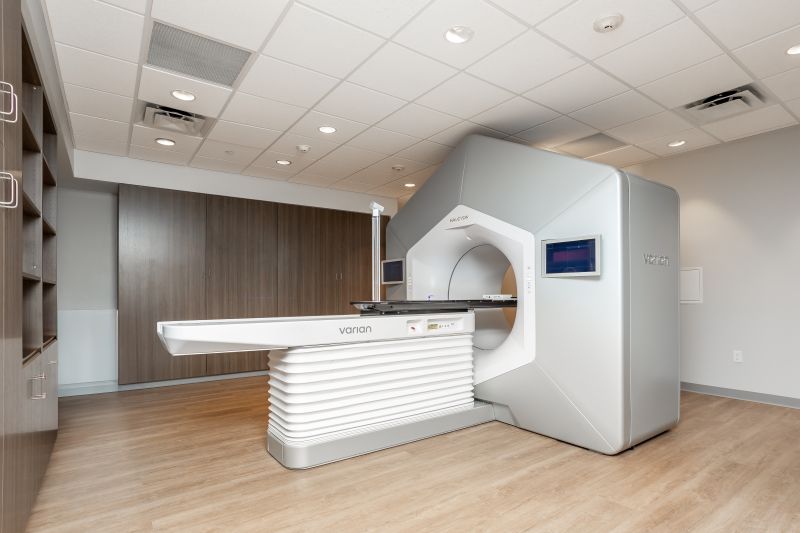
An existing office building might also need structural improvements to properly house a medical use. This is most common with specialty uses such as surgery, imaging centers and cancer treatment centers that use heavier equipment.
“Most office buildings can’t meet those needs,” Goyer said. “A surgery center might have higher heating and cooling requirements than a standard office space. It might not be possible to get an existing office building’s ductwork sized appropriately to get a conversion to medical space to work.”
Even the existing column spacing of a traditional office building can prove challenging. If the column spacing is too narrow, it might be challenging to draw up exam room layouts that work.
Goyer said that the best healthcare candidates for conversions, then, tend to be traditional clinics or primary care physicians. Converting traditional office space to medical use for specialty care uses is often too challenging, he said.
The movement away from hospital settings is no short-term trend
Goyer said that the demand for medical office space, freestanding clinics and ambulatory care centers will continue to rise, whether these spaces are of the new construction variety or conversions from traditional office space.
Goyer said that a growing number of physician groups want to own their real estate, gaining more control over their medical facilities. Cornerstone Companies recently built three medical properties in Indianapolis’ Meridian corridor and two along I-69 on the northeast side of town.
Healthcare facilities are being built, too, in Indianapolis’ outer-ring suburbs, Goyer said. This, again, is an example of healthcare providers following the rooftops and building new care centers where their patients are moving.
Patients have changed, too, with many elderly people undergoing procedures that they would have passed on years ago.
Goyer gives this example: Say a 75-year-old tears an ACL. In the past, that person would have purchased a cane and limped for the rest of his or her life. Today, that same person will schedule an ACL repair surgery.
“There’s been a change in our expectations,” Goyer said. “People expect yo continue to live their lives and do what they want to do not matter how old they are. They are willing to go through procedures to make that happen. That also continues to drive up demand for healthcare treatment. And that drives up demand for healthcare real estate.”
At the same time, the United States is home to an aging population that requires more healthcare services. As Goyer says, most people need most of their healthcare services during the last 20 years of their lives.
“Healthcare development continues at a good pace in this market,” Goyer said. “The demographics still support it.”