Office properties in busy mixed-use districts are outperforming the broader U.S. office market when it comes to leasing activity and vacancy rates. The reason? Shifting demographics and worker preferences, according to a new report from JLL.
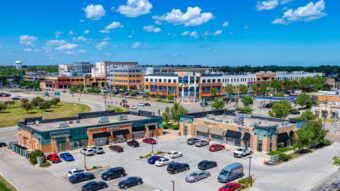
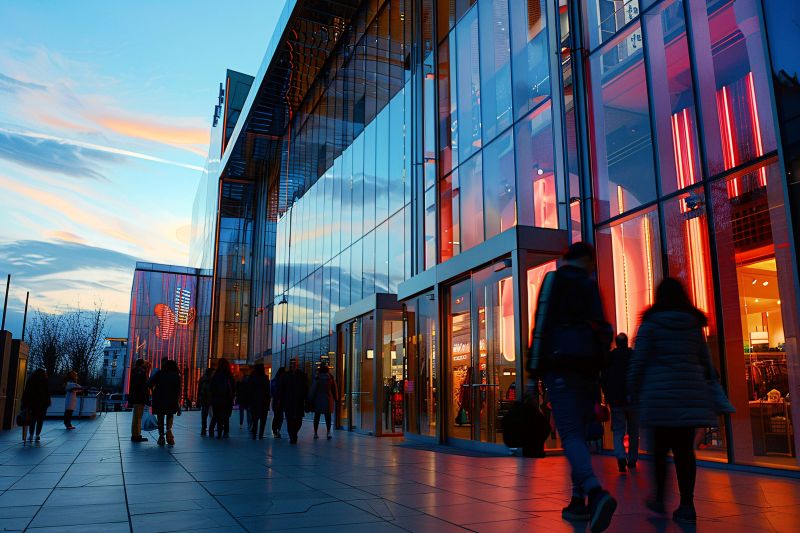
In its Lifestyle Office Markets research report released earlier this month, JLL said that these mixed-use districts—often referred to as lifestyle office markets—combine urban amenities with suburban accessibility and feature high-end property types, transit connections, walkability and round-the-clock activity.
Although lifestyle office markets currently account for just 4% of U.S. office space, JLL projects they could make up as much as 30% of the nation’s office inventory by 2040 as both tenants and investors increasingly favor live-work-play environments.
“We are witnessing a structural shift in how the market values workplace environments, with massive implications for investors, developers and municipalities alike,” said Jeff Eckert, president of Americas Office Agency Leasing at JLL, in the report. “As workplace strategies evolve, organizations are increasingly willing to pay a premium for location-based amenities that offer their employees authentic, engaging experiences that cannot be replicated through a screen.”
The report found that lifestyle office markets consistently outperform traditional office developments. Properties in these areas command a 32% rent premium over other Class-A office space, lease up twice as quickly and maintain significantly lower vacancy rates—12.5% compared to 22.5% nationally.
Institutional investor interest has also surged. Office acquisitions in lifestyle office markets rose from minimal levels before 2015 to more than 8% of institutional office investment volume nationwide in 2024, JLL reported.
Popular location-based amenities that make these development so attractive include proximity to sports and entertainment venues, waterfront settings and access to green space. These features provide measurable rent premiums, according to JLL’s report.
“The pandemic and subsequent push and pull of remote work awakened office tenants to the reality that experience and environment are crucial for attracting and retaining talent,” said Jacob Rowden, senior manager of U.S. office research at JLL. “Companies are flocking to vibrant, mixed-use areas with synergies among diverse property types that create a sense of energy and engagement.”
An example of these developments? One of the more successful is in Milwaukee. The Avenue—a mixed-use redevelopment in the city’s downtown—has achieved nearly 95% office occupancy, JLL says. The development has done this by providing amenities, food and beverage options, and activated public spaces. By offering these pluses, The Avenue attracts a significant amount of foot traffic. And employees prefer working in a location close to food, beverage and entertainment options. That makes office space in such districts more attractive to companies hoping to bring their workers back into the office more frequently.
The Battery in Atlanta, a 74-acre development anchored by Truist Park, home of Major League Baseball’s Atlanta Braves, is another example. Its 630,000 square feet of office space has a direct availability rate of just 0.5%, compared to 25.9% across the metro area. Similar sports-anchored projects, such as The Star in Frisco, Texas, and District Detroit, also report far lower vacancy rates than their surrounding markets.
As demand rises, more professional sports franchises—including the NFL’s Washington Commanders and Major League Soccer’s Chicago Fire—are moving ahead with mixed-use development plans that integrate office, housing, retail and entertainment.
Other successful lifestyle office markets include suburban hubs like The Domain in Austin, Texas, and Reston Station near Washington, D.C., as well as urban districts such as Hudson Yards in New York and The Wharf in D.C.
Edge-of-downtown submarkets are also benefiting. Since 2019, office occupancy in districts such as Boston’s Seaport, Chicago’s Fulton Market and Miami’s Wynwood has climbed nearly 25%, compared to a 7.5% decline for traditional central business districts.
JLL said the momentum reflects both demographic shifts and evolving workforce dynamics. Post-pandemic challenges, including housing affordability, perceptions of crime, and lagging office attendance downtown, have accelerated demand for office space in areas offering more integrated live-work-play ecosystems.