Vacancy rates? They’re still too high in the Indianapolis office market. But the latest research from Colliers does offer some signs that the local office sector here is stabilizing, especially for high-end suburban properties.
That’s the key takeaway from Colliers’ first quarter 2026 Indianapolis office report, which highlights a sector still adjusting to the long-term effects of hybrid work.
The numbers tell a nuanced story. The overall office vacancy rate in the Indianapolis market stood at 21.2% at the end of the first quarter, essentially flat from the previous quarter but down slightly from a year earlier, according to Colliers. While that figure remains elevated, it has stabilized after several years of increases tied to remote and hybrid work trends.
Office leasing activity rose in the first quarter of the year. Colliers reported that the market recorded about 25,600 square feet of positive net absorption in the first three months of the year. During the past 12 months, leasing activity totaled more than 2.4 million square feet, a 24% increase on a year-over-year basis and the strongest rolling total since 2019.
Not surprisingly, though, not all parts of the market are benefiting equally.
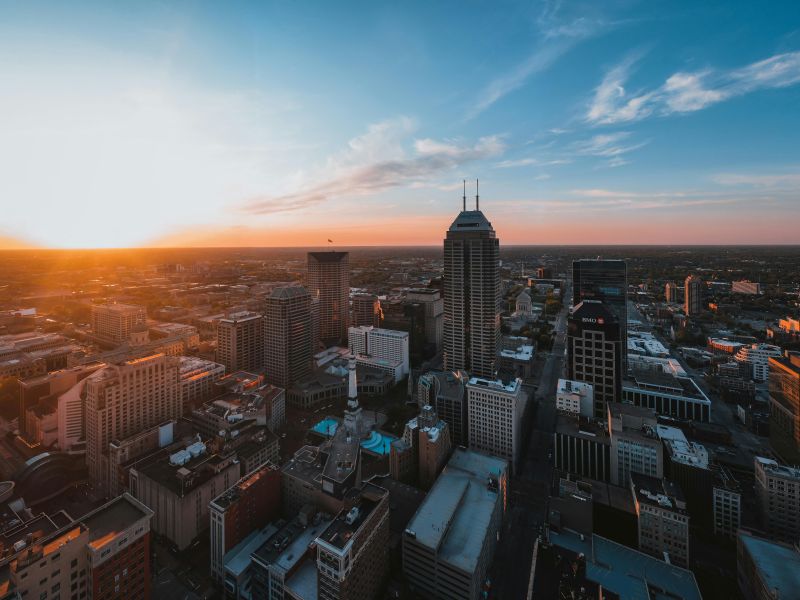
A key example? The downtown Indianapolis office market continues to struggle. The central business district posted a vacancy rate of roughly 27.7% in the first quarter, which Colliers says was a record high. The reasons behind this include ongoing tenant downsizing and the slow return-to-office push among urban users.
In contrast, suburban submarkets, especially those north of the city, are generating more interest from tenants. Office properties in areas such as Carmel, Fishers and Keystone Crossing are seeing stronger demand, particularly for Class-A office space. Colliers said that asking rents for top-tier buildings in some suburban submarkets now exceed those in the CBD. You can credit this to the broader “flight-to-quality” trend in the office sector.
Tenants are still willing to pay a premium for high-quality space, but, as in most major U.S. markets, they are taking less of it. Colliers found that many companies are reducing their footprints by 25% to 30% compared to pre-pandemic levels, reflecting more flexible workplace strategies.
That shift is also reshaping the physical inventory of the market. More than 500,000 square feet of office space has been removed from inventory over the past year through conversions and redevelopment projects, with another 400,000 square feet expected to follow. These conversions, usually transforming outdated office space to multifamily or hotel properties, are helping to keep vacancy rates from rising even higher in the Indianapolis market.
The Indianapolis market is also seeing less sublease activity. Sublease availability has fallen from its peak in 2023, with about 694,000 square feet on the market entering the second quarter of 2026. Colliers reported that some large blocks of sublease space have recently shifted back to direct availability, while overall sublease activity remains a relatively small share of total leasing.
Investment and development activity further highlight the market’s divide. New construction remains limited, with just 70,000 square feet under construction at the end of the first quarter, according to Colliers’ report. New office space that is being built is largely concentrated in suburban, mixed-use environments designed to attract tenants seeking modern amenities.
Projects such as The Union at Fishers District and the planned Bottleworks expansion, anchored by a major lease from Ice Miller, reflect continued confidence developers and owners have in well-located, high-quality developments.
At the same time, investors are targeting value-add opportunities. Colliers pointed to discounted office sales, particularly in the Northwest submarket, where buyers are acquiring underperforming assets at reduced prices and repositioning them for new uses or tenants.