Rochester, Minnesota, has no shortage of jobs. Finding enough housing for the people who fill them? That’s a challenge.
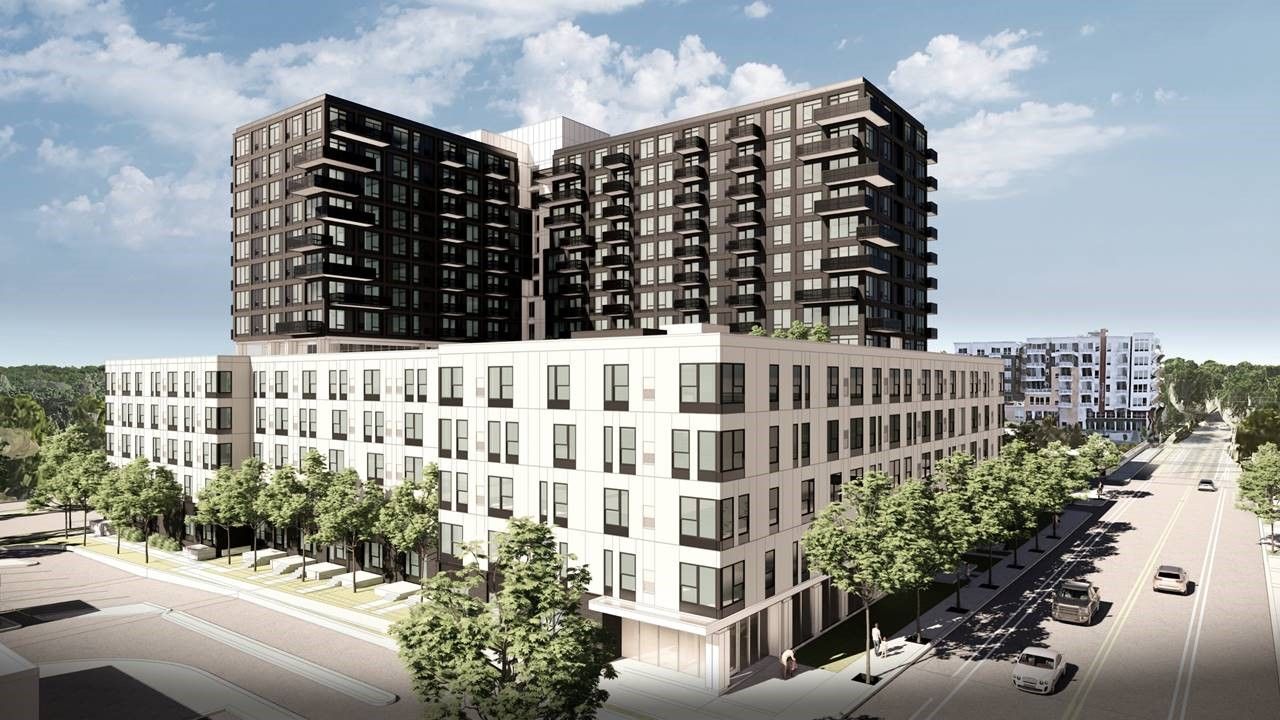
But in good news, a massive new mixed-income housing development might help with this struggle: Sherman Associates is moving forward with a $136.5 million multifamily development on the former Rochester Civic Center North Lot in downtown Rochester.
The Minneapolis-based developer in August announced the financial closing for the project at 217 E. Center St. The development will bring 349 new homes to a prominent downtown site along the Zumbro River and next to the Mayo Clinic campus, with completion expected in the spring of 2028.
The project marks Sherman Associates’ entry into the Rochester and a significant public-private partnership involving the City of Rochester and Destination Medical Center. Its goal is to add much-needed housing while helping transform an important downtown Rochester site into a place where people can live, work and spend time.
“This is an exciting milestone for a project that has been years in the making,” said Rochester Mayor Kim Norton, in a statement. “By bringing both market-rate apartments and affordable senior housing to the heart of downtown, this development will provide more housing options while creating new opportunities for people to live, work and stay connected to our community. We are pleased to see this important site moving forward through a strong public-private partnership.”
Big plans
The development will be split between two residential buildings.
The larger will be a 273-unit market-rate tower. The second will contain 76 affordable apartments for seniors. The two buildings will share a 350-stall enclosed parking structure.
The new residential buildings are much needed. Rochester’s housing market has been struggling to keep pace with demand. Housing studies conducted by Sherman Associates, the City of Rochester, Olmsted County and others have identified a significant shortage and the need for thousands of additional housing units in the years ahead.
Recent market analyses have put multifamily vacancy rates in the low 3% range, well below what would typically be considered a balanced market.
And don’t expect the need for new housing here to slow any time soon. Rochester continues to grow as a regional employment center, while the Destination Medical Center district is attracting additional investment. And the Mayo Clinic’s ongoing $5 billion campus expansion is expected to generate additional workforce growth and more demand for housing.
For Sherman Associates, the Civic Center North Lot offered an opportunity to address some of that demand while putting housing in a location that is already closely connected to Rochester’s employment and entertainment centers.
Carole Mette, senior developer at Sherman Associates, pointed to the site’s location on the edge of downtown, its direct access to the riverfront and its proximity to major employers, including the Mayo Clinic, as major positives of the development. Downtown businesses and civic amenities are within walking distance, too.
“The design of Rochester Civic Center North begins with the people who will call it home,” Mette said. “Many future residents will be healthcare professionals, researchers and others whose work centers on caring for and serving others. Our goal is to create a place that supports their well-being when they step away from work.”
Just as important, Mette said, was the partnership behind the project.
“Complex developments of this scale require close coordination among many stakeholders,” Mette said. “The city’s long-term vision for the site and its commitment to downtown investment helped create a framework that allowed the project to move forward. We are grateful for the support and collaboration of both the City and DMC throughout the process.”
The city’s long-term vision for the site and its commitment to downtown investment helped establish the framework that allowed the project to move ahead, she added.
Housing for a changing workforce
The market-rate tower will offer more than conventional apartments. Of its 273 residences, 221 will be traditional apartment homes. Another 52 will be fully furnished residences available on a short-term or month-to-month basis. Those flexible units are aimed in part at healthcare professionals, visiting medical staff, patient families and others who need temporary housing near Mayo Clinic and downtown Rochester.
That makes the project something of a reflection of Rochester’s unique economy: A major healthcare and research center requires housing that can accommodate people who might relocate to the city permanently as well as those who may only need a home for several weeks or months.
The 76-unit affordable senior housing building addresses another part of the market. The apartments will give older residents access to downtown amenities, healthcare services and the broader Rochester community while providing an affordable housing option.
The development will also open the site to the broader community. Plans call for a publicly accessible walking path along the Zumbro River, which borders the property to the east. The path will improve public access to the waterfront while creating another connection through downtown.
The development is near the Civic Center Link Bus Rapid Transit station and connects with Rochester’s riverfront trail system and pedestrian skyway network. Residents will have access to Mayo Clinic, the Civic Center, downtown shopping and dining, hotels, entertainment and other services without having to travel far from home.
A different approach to downtown development
Sherman Associates is also approaching the project with an emphasis on wellness and sustainability.
Mette said the design is organized around three themes: elevated renewal, holistic living and gathered worlds. Rather than taking design cues from the clinical environment surrounding much of Rochester’s economy, the project will use natural materials, wellness-focused amenities, riverfront connections and gathering spaces to create a more residential, restorative atmosphere.
Sustainability is another component. The market-rate tower is pursuing National Green Building Standard Silver certification. The senior housing building is pursuing Enterprise Green Communities and ENERGY STAR Multifamily New Construction certifications.
The buildings will incorporate ENERGY STAR appliances, solar-ready infrastructure and high-performance building systems designed to meet Minnesota Sustainable Building 2030 standards.
“Rather than drawing inspiration from a clinical environment, the building embraces a sanctuary-inspired philosophy,” Mette said. “Natural materials, wellness-focused amenities, riverfront connections and thoughtfully designed gathering spaces create an atmosphere that feels restorative, welcoming and residential.”
Financing the project required an equally deliberate approach. Sherman Associates secured tax increment financing to support both the market-rate and affordable housing components, allowing the two developments to advance simultaneously as part of one larger plan for the site.
That unified strategy was important because the project itself presented several development challenges.
The two residential components have different financing structures, design requirements and resident populations. Combining them on one site required extensive coordination.
The site also has a high groundwater level, making a conventional underground parking garage impractical. Instead, Sherman incorporated an above-grade parking structure that will serve both buildings while preserving as much developable land as possible.
The development team also had to accommodate shared parking, maintain access on a constrained urban site and incorporate the publicly accessible riverfront improvements.
Frana Companies is serving as general contractor, with ESG Architecture & Design as architect.
“A strong downtown is not simply a place people visit. It is a place people can call home,” said DMC Executive Director Patrick Seeb, in a statement. “Sherman Associates’ investment will bring hundreds of new residents to the heart of Rochester, create more housing choices across ages and incomes, and reconnect an important downtown site to the Zumbro River. We are grateful for Sherman’s confidence in Rochester and for the public-private partnership turning a long-held vision into a defining investment in downtown’s future.”