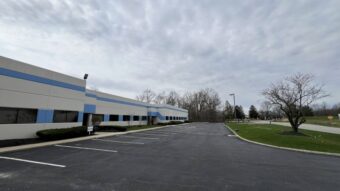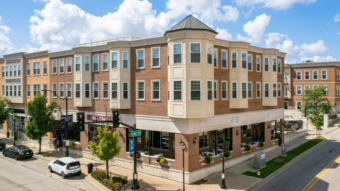
The building in Addison wasn’t supposed to become a car club. It started as an unremarkable 20,000-square-foot distribution shop before its owner decided to rethink the space, overhaul the interior and turn it into a destination for collectors. The construction was financed by Union National Bank, the vision took shape and the building reopened as something completely different from what the market typically offers. It became an emblem of 2025, a year when the deals that moved were often the ones driven by creativity, speed and borrowers willing to reimagine what an aging industrial asset could be. Deals like that didn’t happen by accident.
According to Anthony Catanese, Manager of Business Development at Union National Bank, transactions like the Addison project stood out because they were exceptions in a year defined by stalled trading velocity. His team closed several industrial deals, including an owner user expansion in Elk Grove and an owner user transitioning to investor sale in Bensenville. But each one required precision and timing because the market itself didn’t provide much momentum.
Catanese focuses on small to midsize industrial buildings, a category that usually moves even when the broader market hesitates. Yet he watched deals slow as sellers clung to valuations shaped during the low rate era, making price alignment difficult and dragging out timelines. The disconnect created an unexpected drag on activity even in sectors where fundamentals remained solid.
“The stalled velocity in the trade of functional, older industrial assets surprised me,” Catanese said. “Owner-user demand stayed relatively strong and steady.”
That theme of unexpected pauses and reversals echoed across the Chicago finance community.
“The one financing trend that surprised me in 2025 was how momentum for CRE lending created during the first quarter stalled after tariffs were introduced,” said Robert Burda, senior regional manager at Associated Bank.
Even as the broader market cooled, Catanese’s team found ways to adapt. He emphasized a shift toward prioritizing operational cash flow and business fundamentals over traditional loan-to-value thresholds. That meant diving deeper into the quality of a borrower’s business, its debt service capacity and the durability of its revenue streams rather than relying primarily on appraised real estate values. It also meant adjusting amortization schedules and terms to give borrowers more monthly breathing room when repricing challenges arose.
“We really shifted to prioritizing operational cash flow over pure LTV,” Catanese said. “We’re looking closely at the borrower’s business, their EBITDA and their debt service because that ultimately dictates our appetite more than the appraised value.”
Not every lender felt compelled to recalibrate. Associated Bank, according to Burda, didn’t find a need to adjust its lending strategy throughout the year.
“We continued to actively seek CRE lending opportunities with our customers and prospects,” Burda said.
Where lenders aligned less consistently was in how each interpreted the market’s biggest mismatch. Catanese pointed to a disconnect between what buyers hoped to achieve and what current pricing realities allowed, noting that the shift in debt costs fundamentally changed how deals penciled.
“Borrowers who acquired properties from 2018 to 2022 still expect valuations and leverage based on the high watermarks of that era,” Catanese said. “With today’s higher cost of debt and more conservative underwriting, the math just doesn’t work the same way.”
Burda described a different disconnect, framing the tension not in lending metrics but in capital availability, and said the mismatch is how equity sources are scrutinizing new CRE investment opportunities and limiting new investments.
“The mismatch is not between borrower expectations and lender appetite; it is between borrower expectations and equity source appetite,” he said.
Looking into 2026, Catanese believes investors and owners will need to focus more on the cost and availability of skilled labor and the accelerating impact of automation. For industrial assets, he sees long term performance tied to whether facilities are equipped to support robotics, vertical storage, charging stations and modern material handling systems. Those considerations matter even in smaller buildings, where clear heights, floor stability and electrical capacity can determine whether a tenant’s operation can scale.
“The biggest variable to watch is the cost and availability of skilled labor and how that intersects with the rising cost of automation,” Catanese said. “Interest rates and rents matter, but labor is the long-term headwind.”
Others are watching macro pressures instead. Burda said stability itself will be the most important variable in 2026 after seeing how tariff negotiations and policy shifts created uncertainty for lenders and borrowers throughout 2025.
Even with limited inventory, Catanese has seen well-located industrial properties move quickly when they do come to market. He noted that the buyers who succeed are often the ones who bring their financing teams into the process early, allowing them to write, adjust and close with urgency. In a few cases, his team pushed deals across the finish line in under 30 days when clients were prepared to act.
“With limited inventory, good properties move fast,” Catanese said. “We tell people to get their financing team involved early even before a property is under contract.”
The Addison car club stands as a fitting symbol for a year that demanded both realism and imagination. Transactions were harder, pricing was tougher and underwriting required more discipline, but the deals that worked often reflected a willingness to move decisively and think differently. As 2026 approaches, lenders expect more of the same and the market is likely to reward borrowers, investors and partners who prepare early and act with confidence. Just as that repurposed building proved, opportunity favored those willing to move and adapt.