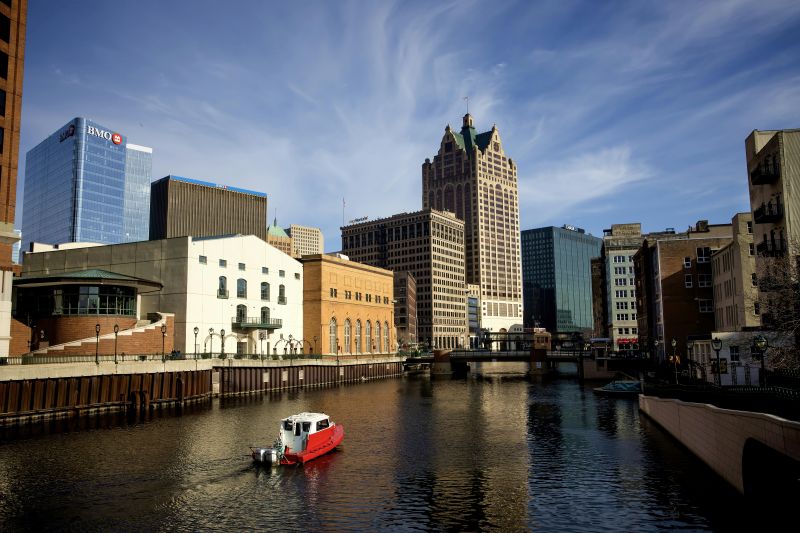
Josh Krsnak, chief executive officer of Hempel Real Estate, has an interesting view of the Midwest office market. Hempel Real Estate operates offices in Eden Prairie, Minnesota – serving the Minneapolis/St. Paul market – and Milwaukee. Krsnak, then, has an up-close view of one downtown Midwest office market that remains resilient and one that continues to struggle.
The market with a resilient downtown? Milwaukee. The struggling one? Minneapolis/St. Paul.
What’s the difference between these two markets? Hempel said that government officials are encouraging business development in the Milwaukee market. It’s easier to run a successful business here.
In the Minneapolis market? Government bodies aren’t quite as pro-business. And that makes a difference, Hempel said.
“Milwaukee is performing better than Minneapolis,” he said. “We are getting more deals done in Milwaukee than in Minneapolis, especially in downtown Milwaukee compared to downtown Minneapolis. Milwaukee is just more friendly toward business development today.”
As an example of this, Krsnak points to Fiserv, which in March of last year moved its global headquarters from suburban Brookfield, Wisconsin, to downtown Milwaukee. Krsnak said that one of the reasons why Fiserv moved into the 170,000-square-foot facility was that the Milwaukee Common Council approved a TIF package to lessen the costs that the company would face.
While this move did cost the city money, it also helped bring a key employer to downtown Milwaukee.
“Milwaukee gave them a TIF, money that Fiserv needed to help build and remodel the space they moved into,” Krsnak said. “In return, Fiserv has required that their employees be in the office three days a week.”
That helps bring more activity to downtown Milwaukee, a benefit for the surrounding retailers and restaurants.
Another big office move in downtown Milwaukee? Northwestern Mutual’s downtown office tower redevelopment hit a key milestone this March, the topping off of the 18-story building.
Northwestern Mutual expects the $500 million redevelopment project to wrap up in 2027. The company is moving about 2,000 employees from an office in Franklin, Wisconsin, to the downtown location.
This development is partly fueled by $30 million in TIF funds. The Common Council approved this TIF in 2023. As with Fiserv, Northwestern Mutual is requesting that its employees work in the downtown office three days a week.
“I’ve signed 202,000 square feet of leases in downtown Milwaukee in the last couple of years,” Krsnak said. “The reason why? Everyone is committed to doing what it takes to get companies to locate in the city’s downtown.”
That isn’t always the case for downtown Minneapolis, Krsnak said. For one thing, it’s extremely difficult to get exterior signage on an office building in downtown Minneapolis. That seems like a small nuisance, but it does keep some companies from locating in the city of the center, Krsnak said.
Minneapolis isn’t as generous with TIF programs, Krsnak said.
“The big difference between Minneapolis and Milwaukee is that people are not as likely to move to downtown Minneapolis because they are not getting the same opportunities as they are in other cities,” Krsnak said.
Krsnak said that in the past as he traveled the country, people frequently told him how much they loved Minneapolis. The city’s reputation, though, has taken a hit since COVID, the murder of George Floyd and the riots that followed that crime.
City officials need to recognize this and make it easier and more attractive for businesses to locate in downtown Minneapolis, Krsnak said.
“Minneapolis has lost some of its cache,” he said. “We have to start acting like we are an underdog, not like we are the city that everyone is trying to replicate.”
While downtown Minneapolis’ office sector is sluggish, Krsnak said, leasing activity is stronger in the city’s surrounding suburbs. Part of the reason? Hempel points to signage. Tenants can place their names on the exteriors of suburban office buildings more easily.
“There is no question about it, we are seeing more office transactions in the suburbs,” Krsnak said. “All my buildings in the suburbs have exterior signage. Downtown, that is a more contentious issue. It might change. I’m hoping it does.”
Krsnak points to a 15,000-square-foot office lease his company recently closed in suburban Eden Prairie, Minnesota. Krsnak said that the firm moved in partly because it can have its name on the building. That was a key factor in addition to the property’s easy access to the interstate.
“Everyone likes to see their name in lights,” Krsnak said. “It’s free advertising to put your name on the building.”
This doesn’t mean that downtown Minneapolis hasn’t improved since the tough days of 2020. Krsnak said that the city’s downtown is far busier today than it was back then. Activity levels downtown aren’t quite as high as they were before the pandemic, but they are stronger than they were in 2020 or 2021.
The biggest challenge for downtown Minneapolis? Major employers Target and Hennepin County have not required their employees to come back to their downtown offices on a frequent basis yet.
And without the workers from those two major employers, downtown Minneapolis still looks quieter than it did before the pandemic.
“The county, especially, needs to step up,” Krsnak said. “They are only hurting themselves. When you don’t have enough workers downtown, that downtown ecosystem gets off balance. I would argue that if county employees don’t want to come back downtown, you should find employees who do. If you must pay them more, so be it.”
In Milwaukee, Milwaukee County recently signed a lease for 25,000 square feet in the city’s ASQ Center.
“They are eating their own cooking in Milwaukee,” Krsnak said. “In Milwaukee County, they are putting their employees downtown. In Minneapolis, that is not happening.”
And what about those office spaces that aren’t modern enough to attract tenants today? Or those that lack the amenities that workers and tenants both want?
Krsnak said that conversions will play a role in taking older, outdated office spaces off the market. The challenge remains that not enough older office buildings are candidates for conversion. To convert an office building to multifamily, for instance, developers need both the right building and the right location.
Conversions are expensive, too, further limiting how many older office buildings can be transformed into other uses.
Still, even with these hurdles, Krsnak said, it makes sense for developers to convert as many undesirable office buildings as they can.
“We need less office inventory. It’s a supply-and-demand issue,” Krsnak said.
Hempel isn’t adverse to removing older office stock from the market. Krsnak said that the company earlier this month purchased a 40,000-square-foot office building in St. Louis Park, Minnesota, that the company will tear down. Hempel will build an apartment building on that site.
Hempel is also building a new office building on land across the street.
“Why are we tearing down the building we just purchased?” Krsnak asked. “The way these older buildings are designed and functioning today don’t match what employers want. The more of these outdated office properties that get repurposed, torn down and utilized in new ways, the better. But you need TIF districts and tax credits or the economics don’t work. If you don’t get that help, the math doesn’t pencil out.”